

The Ontario Lung Screening Program (OLSP) helps to detect and diagnose lung cancer in people at high risk. You have been referred to the OLSP program in Waterloo Wellington to assess your risk. To find out more about OLSP services contact your local OLSP location:
Phone: 519-749-4300 extension 3783
Email: [email protected]
A doctor or Nurse Practitioner (NP) will refer you to the OLSP program for assessment. You can also self-refer.
Regular screening is important because it can find lung cancer early, when treatment has a better chance of working.
You may be at high risk if you:
By getting this handout, you are someone who may qualify for lung cancer screening. Based on your age and smoking history, you are moving on to the next step. You will be booked for a risk assessment phone call with an OLSP nurse.
During your phone call with the OLSP nurse, they will ask you more questions about your health history. The nurse will calculate your risk score. Your risk score tells you your chance of getting lung cancer in the next 6 years. Your risk score will determine if you qualify for lung screening and help to plan next steps in your care.
Risk Score
For example, a risk score of 10 means that there is a 1 in 10 (10%) chance that you may get lung cancer in the next 6 years. If your risk is 2 out of 100 (2%) or higher over the next 6 years, you can take part in the Ontario Lung Screening Program.
Your risk of developing lung cancer can change over time. If an OLSP site tells you that you do not qualify for screening, you can check again in 3 years. You should check again sooner if you have:
Cancer screening is testing done on people who are at risk of getting cancer, but who have no symptoms and generally feel fine. This testing may help find cancer early, before symptoms start. The lung cancer screening test is a type of computed tomography (CT) scan that uses a small amount of radiation. This test is called a low-dose CT scan.
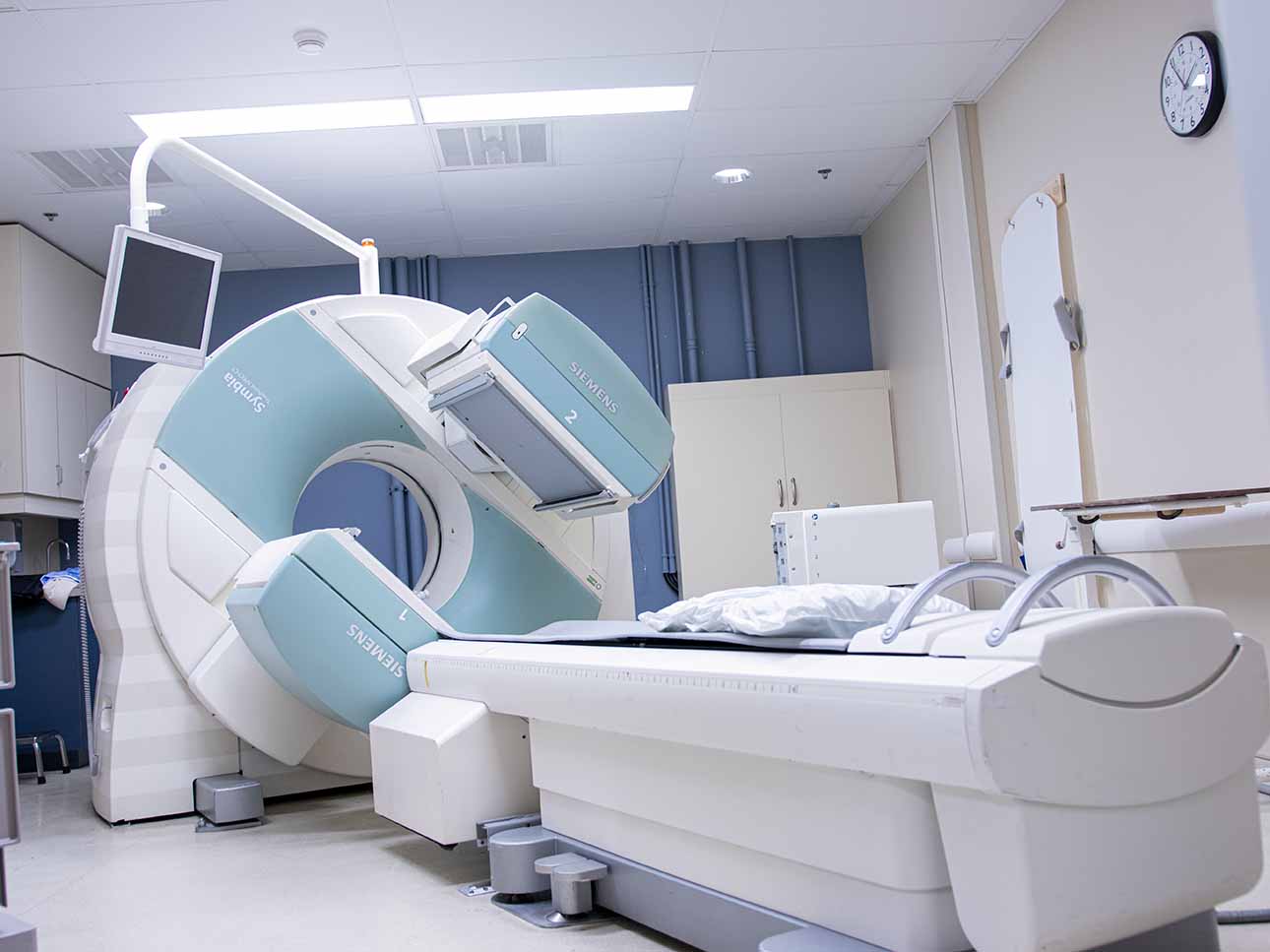
During a low-dose CT scan, you lie on an open table that passes through a large donut-shaped machine, called a scanner. The scanner uses a small amount of radiation to take detailed pictures of your lungs. The test only takes a few minutes and is not painful. There are no medications or needles given during the test.
The low-dose CT scan looks for lung nodules, which are spots on someone’s lungs, but cannot tell whether they are actually cancer. Having a lung nodule does not necessarily mean that you have lung cancer, but it does mean that more testing is needed.
Not all of the lung cancers found by low-dose CT will be caught early enough. Screening may not make your health better or help you live longer if it finds:
Learn more about CT Scans, how they are done, and side effects through the Canadian Cancer Society: cancer.ca/en/treatments/tests-and-procedures/computed-tomography-ct-scan
While screening can help find lung cancer early, screening tests are not perfect and can have potential harms. For people at high risk of getting lung cancer, the potential benefits of finding cancer early are likely greater than the potential harms of screening. When making a decision to screen think about what matters most to you.
The amount of radiation from a low-dose CT scan is:
Once you are booked for your low-dose CT, you are part of the Ontario Lung Screening Program. Read on for information about your results.
After your low-dose CT scan:
If your low-dose CT scan shows something unusual in these other body parts, your results will be sent to the doctor or nurse practitioner that referred you. They will decide whether you need more tests based on these results.
What it means: Your scan showed a possible infection or inflammation that needs follow-up.
Next steps: Your next scan will be within the next 1 to 3 months.
What it means: Your scan did not show any nodules that need follow-up.
Next steps: Your next scan will be in about 12 months.
What it means: Your scan showed 1 or more nodules with a very low chance of being or becoming cancer.
Next steps: Your next scan will be in about 12 months.
What it means: Your scan showed 1 or more nodules with a low chance of being or becoming cancer.
Next steps: Your next scan will be in about 6 months to check whether any nodules have changed.
What it means: Your scan showed 1 or more nodules that might have a chance of being or becoming cancer.
Next steps: Your next scan will be in about 3 months to check whether any nodules have changed.
What it means: Your scan showed 1 or more nodules that need more testing.
Next steps: You will be sent for more testing.
What it means: Your scan showed 1 or more nodules that need more testing.
Next steps: You will be sent for more testing.
Visit the J. Wesley Graham Patient & Family Resource Centre to get a printed copy of resources. Volunteers can help you find and access credible cancer information. You can also scan the QR Code or click the blue links below to learn more online.





About This Resource
Author: Waterloo Wellington Regional Cancer Program
Revised: March 2026
PEM#: WRHNCC0092
Use this resource for your information only. It does not replace medical advice from your doctor or other healthcare professionals.
Email: [email protected]
Website: www.cancerwaterloowellington.ca


Treatment
Overview of key safety concerns for patients starting to take oral cancer drugs.
During Treatment
A resource for patients on drugs for bone health, listing common side effects that you should contact your team about.
System Navigation
A guide in the steps to get your prescription drugs for cancer treatment at WRHN CC.