


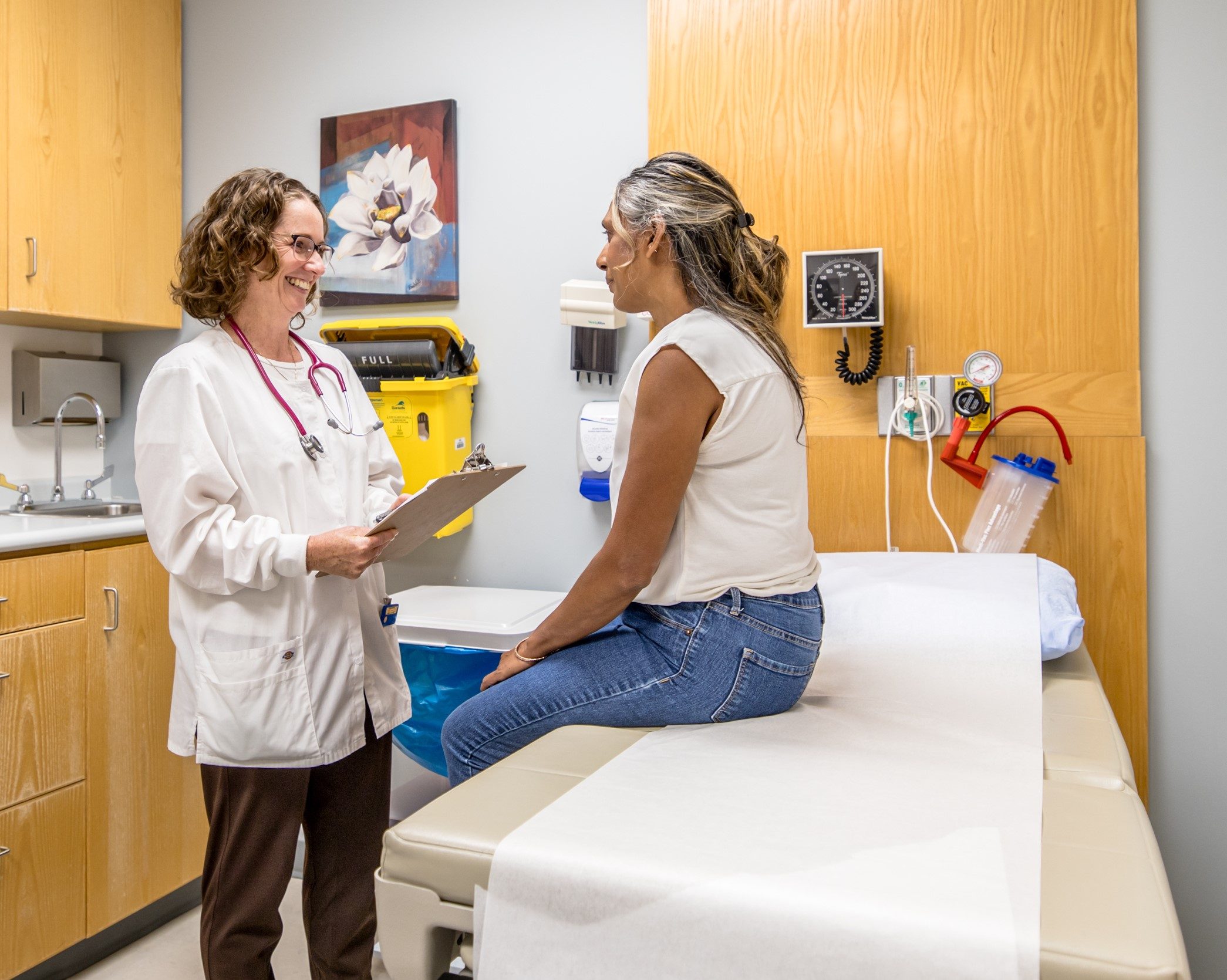
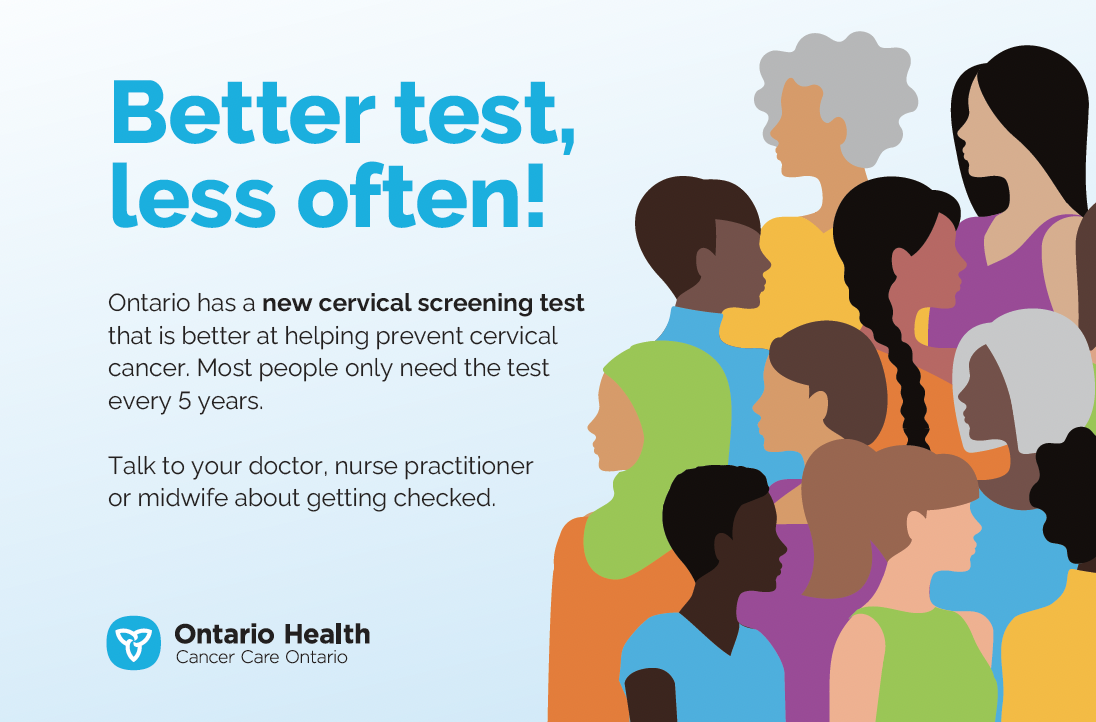
On March 3, 2025, Ontario Health (Cancer Care Ontario) launched a new cervical screening test.
The cervical screening test checks for types of human papillomavirus (HPV) that can sometimes cause cervical cancer. It also checks for cell changes in the cervix caused by these types of HPV. This test does NOT check for other types of HPV.
The cervical screening test has replaced the Pap test because it is better at helping prevent cervical cancer and more accurate. This means most people can go longer between screenings.
Watch video: https://www.youtube.com/watch?v=1bJcsb6aBBE
Dr. Naik talks about the new cervical screening test in Ontario
with HPV being the new way that we’re going to do the anterior cervical screening program we’re going to have a more accurate more precise test that we can offer to people with cervixes so that they can get the the care they need earlier and more accurately than before and also reduce the Harms in terms of not having to do referrals when not necessary Sol a Pap test in the sense that you still have to go see a clinician and they’re going to do a swab of the cervix for anyone who does have a uterus um it’s still the same brush that we use but it’s the test that’s run the back and that’s going to change so before we were looking under a microscope at the cell changes um that introduced more subjective aspects of who’s reading it what their training was things like that now what we’re doing is we’re taking it a step further um ahead of the pathophysiology and actually looking for the infection of HPV and that’s going to tell us hey do you have HPV what type of cancer causing HPV do you have and then we’re going to look at the cells afterwards because majority of cervical cancers are caused by HPV and we’re hoping now that we’re increasing that awareness of HPV as the virus that’s causes which we’ve known for quite some time that’s also going to help encourage more um vaccination against the HPV virus people are eligible for the HPV vaccine at a young age uh Public Health offers it from grade seven um but you can get the HPV vaccine all the way into adulthood so if you read the monograph for the HPV vaccine it does say that it was studied up up till the age of 46 but we if we look at the section of gynecologist of Canada they actually say there is no upper age limit for getting the vaccine and so I’m encouraging everyone to get the vaccine no matter what your age is so historically going back couple of all the way back to the beginning of the ocsp program it used to be 18 then it got changed to 21 and now we’re changing it to 25 as we’re learning more and more about the disease we’re learning more about how the virus interacts with the human body we’re understanding that sometimes their bodies can clear it but sometimes we can’t and so what we’re what we’re doing is we’re saying hey we know your body could clear it so we’re going start at 25 because those who do have the HP virus at that stage we should be looking for it the cancer is caused by persistent infection I think that’s key and it takes years for that infection to turn into cancer right but what we want to make sure is that we’re catching it when somebody’s not feeling the symptoms there’s no point in waiting until you start feeling symptoms because it could be too too late at that stage and to the whole reason getting a screening test done is that we capture it early when you’re not feeling symptomatic and that we can intervene at an earlier stage should the cells change screening is still important repetitive screening is really important uh we are changing the interval between screening so for somebody who is of uh who’s healthy in body um it’s every 5 years now so we’re making it less stressful but it doesn’t mean that it’s any less important so please do Reach Out get screened find out what your HPV status is get vaccinated because all those things add up to living a long healthy life so the test that we’re offering here in Ontario is checking for the cancer causing HPV just because somebody might come back with a negative HPV test does not mean they you don’t have HPV HPV also causes warts and so when you do get that HPV negative test it doesn’t mean that you’re immune to all types and on top of that just because you’ve cleared HPV once it doesn’t mean that your immune against all the different strains of HPV and so it’s still important to get screened on a regular basis it’s still important to get the vaccination and just because you got vaccinated doesn’t mean that you shouldn’t get screened with a Pap test uh it is just as important it just means you better protected at that stage
Cervical screening is testing done on people who are at risk of getting cervical cancer, but have no symptoms and generally feel fine. The Ontario Cervical Screening Program is a screening program that encourages these people to get screened regularly. Regular cervical screening can help you avoid getting cervical cancer.
Cervical cancer is cancer in the cervix. The cervix is a body part that connects the uterus (womb) to the vagina (genital opening). Cervical cancer is almost always caused by human papillomavirus (HPV). You are not more likely to get cervical cancer if other people in your family have had cervical cancer.
HPV is a virus that is passed from one person to another through sexual contact. Sexual contact can include many different things. In this fact sheet, it includes any time another person has contact with your genitals (private parts). This contact can be with the hands, mouth or genitals.
HPV is common and will often go away on its own without doing any harm.
There are more than 100 types of HPV and they can cause changes to the cells of the cervix. With some types of HPV, these cell changes can turn into cervical cancer over time if they are not treated.
Currently, the Ontario Cervical Screening Program recommends that anyone with a cervix (women, transmasculine and non-binary people) who is, or has ever been, sexually active have a Pap test every 5 years starting at age 25. Some people may need to get screened more often based on their medical or screening history.
Most people can stop cervical screening from ages to 65-69. Some people may get cervical screening tests after age 69 based on their medical history or screening test result history.
People should still get screened if they:
Make an appointment with your doctor, nurse practitioner, or midwife.
If you do not have a doctor, nurse practitioner, or midwife, you can use Health811:
Some public health units and community health centres also provide cervical screening tests. Local clinics that offer cervical screening tests:
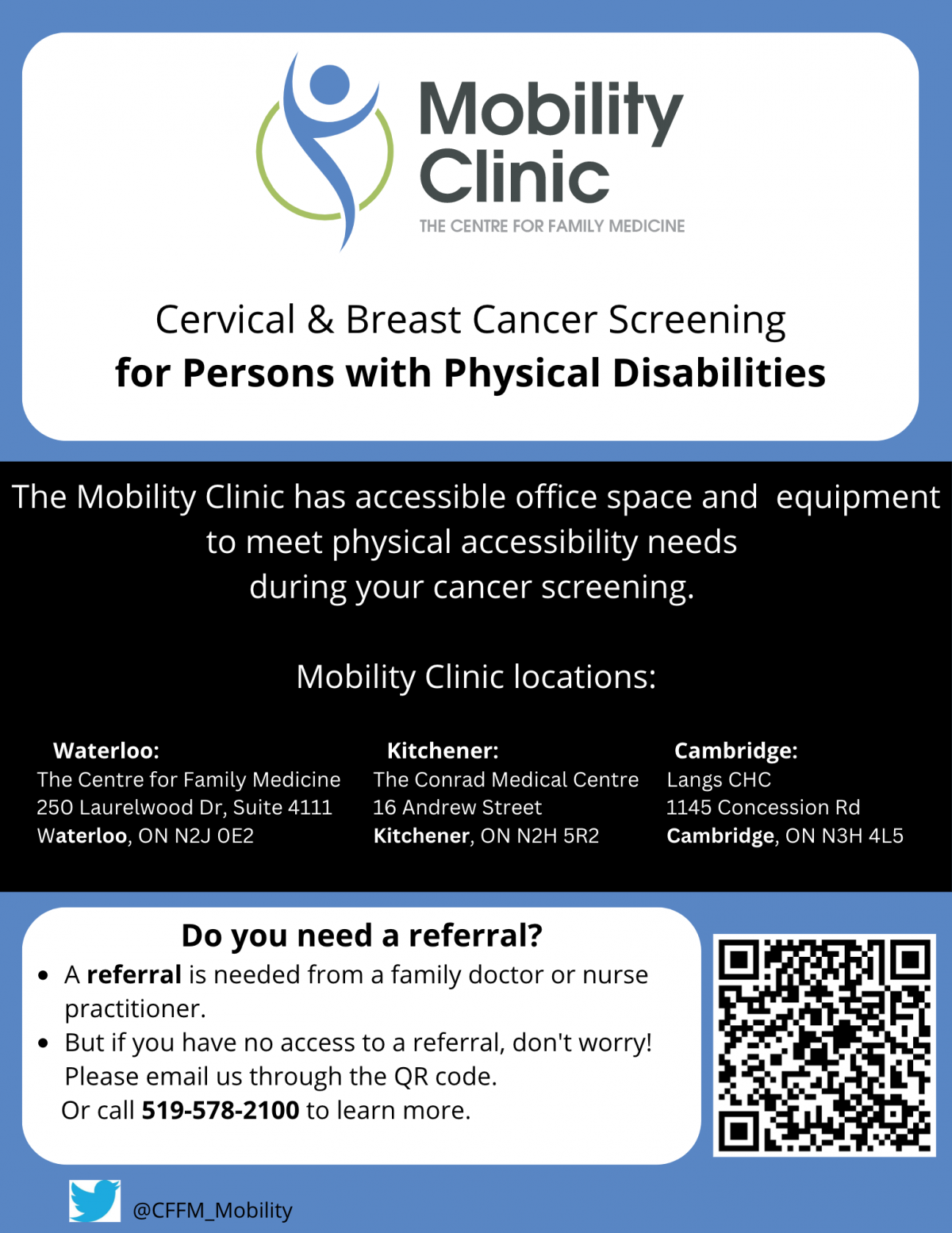
The Mobility Clinic offers cervical (and breast) cancer screening for people with physical disabilities or accessibility issues.
The person who did your cervical screening test will get a copy of the test results from the lab. Ontario Health (Cancer Care Ontario) will also mail you a letter with your test results.
For more information about cervical screening and the cervical screening test, visit: ontariohealth.ca/cervical-test.