Skip to Main Content

At Waterloo Regional Health Network (WRHN), we take pride in the services and care we provide. It is important for us to share our performance with the communities we serve. Sharing openly helps make sure we continue to grow, innovate, and give the best care possible.

Stroke Program Highlights

Highlights from May to June 2025

From May 26 to 30, 2025, a review team visited WRHN @ Midtown and WRHN @ Chicopee. They looked at our stroke programs and services using national quality standards. WRHN earned Stroke Distinction™, which means we are a leader in high-quality stroke care in Canada.

Two bilingual badges display 'Distinction Award Stroke' and 'Accreditation Canada' with a red icon.
Stroke Distinction™ award graphic from Accreditation Canada in English and French.

Highlights from April to September 2024

Emergency Stroke Care

A stroke is a medical emergency that happens when a blood clot blocks a blood vessel in a patient’s brain. Almost two million brain cells die every minute after a stroke starts (Saver, 2006). Stroke patients need treatment as soon as possible for the best chance of recovery.

At WRHN, we continue to work to shorten our door-to-needle time. This is the amount of time between when a stroke patient arrives and when they get medicine that treats blood clots. From April to September 2024, we lowered our median door-to-needle time from 51 minutes to 43 minutes. This improvement saved approximately 16 million brain cells per stroke patient.

Acute (Critical) Stroke Care

Stroke units provide evidence-based care for patients after a stroke. When patients are treated on a stroke unit, they:

  • have less complications
  • recover better

Care teams include many types of healthcare workers. Each team member has specific skills and knowledge about stroke care.

In 2024, 882 patients were admitted to WRHN for a sudden (acute) stroke or transient ischemic attack (TIA). Of these patients, 97.3 per cent received care on a designated stroke unit.

Stroke Rehabilitation

Rehabilitation helps patients rebuild their strength and independence after a stroke. Direct inpatient rehabilitation therapy is an active, in-person treatment. It is monitored or guided by a therapist. It can:

  • improve patients’ mental abilities
  • improve patients’ mobility
  • help patients complete daily living activities

It plays an important role in stroke recovery.

Our stroke team does direct inpatient rehabilitation therapy with patients at WRHN @ Chicopee. Every day, they do a median of 85.6 minutes of therapy with each patient. This is an improvement from 81.3 minutes during the previous quarter.

WRHN @ Chicopee is a leader in direct minutes of therapy across the Central South Regional Stroke Network. It also helps patients recover well after a stroke. Their progress is tracked using the Functional Independence Measure (FIM).


Health & Stroke in Waterloo Wellington

WRHN provides important stroke services at both campuses. WRHN @ Midtown is a District Stroke Centre for Waterloo Wellington as part of the Central South Stroke Network. It provides:

  • emergency stroke services
  • acute (critical) stroke services
  • services to help prevent stroke

WRHN @ Chicopee provides rehabilitation and helps patients re-enter the community after a stroke.

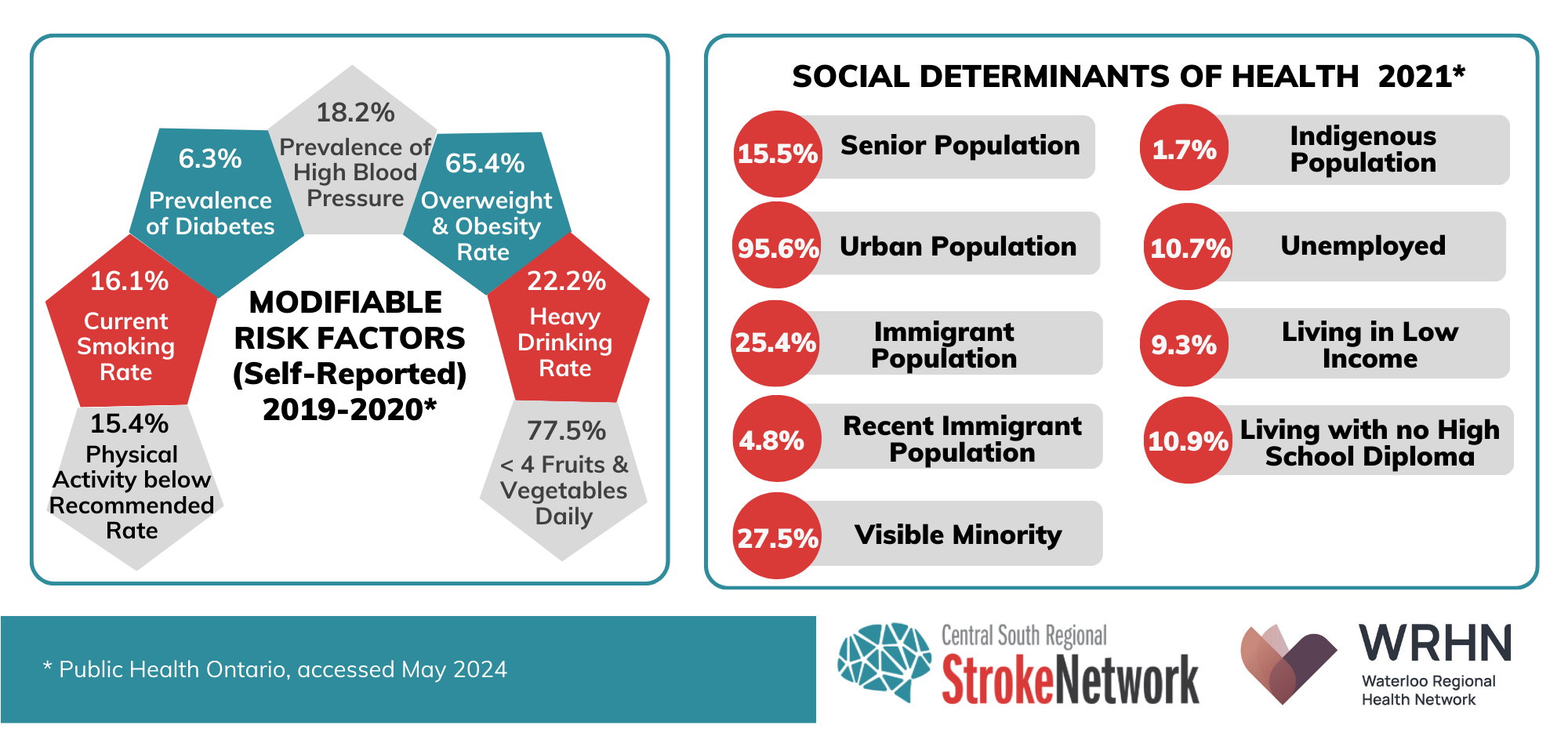
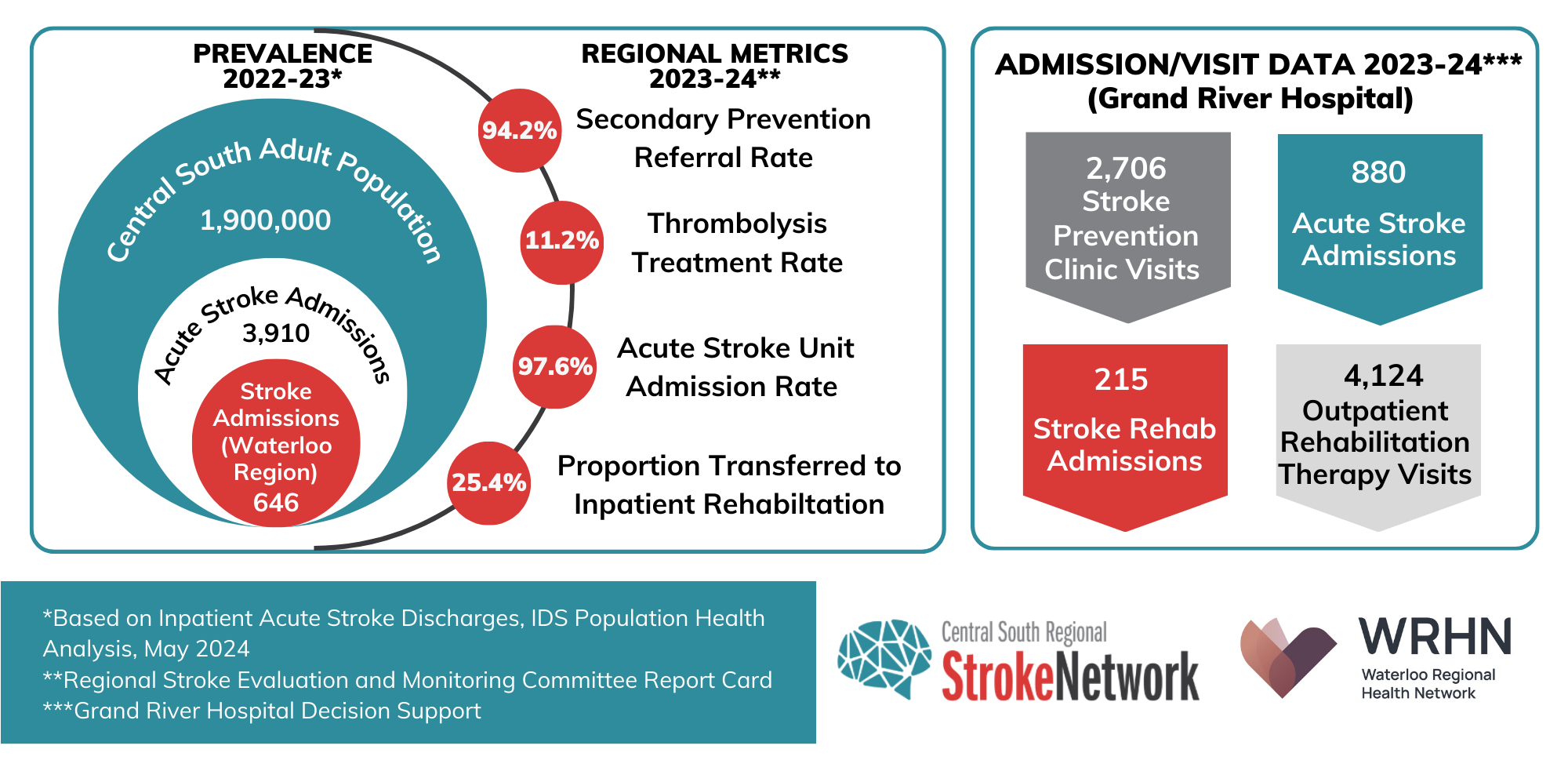
Learn more about stroke, care, and health in Waterloo Region between 2019 and 2024:

Stroke, Care, & Health Data